
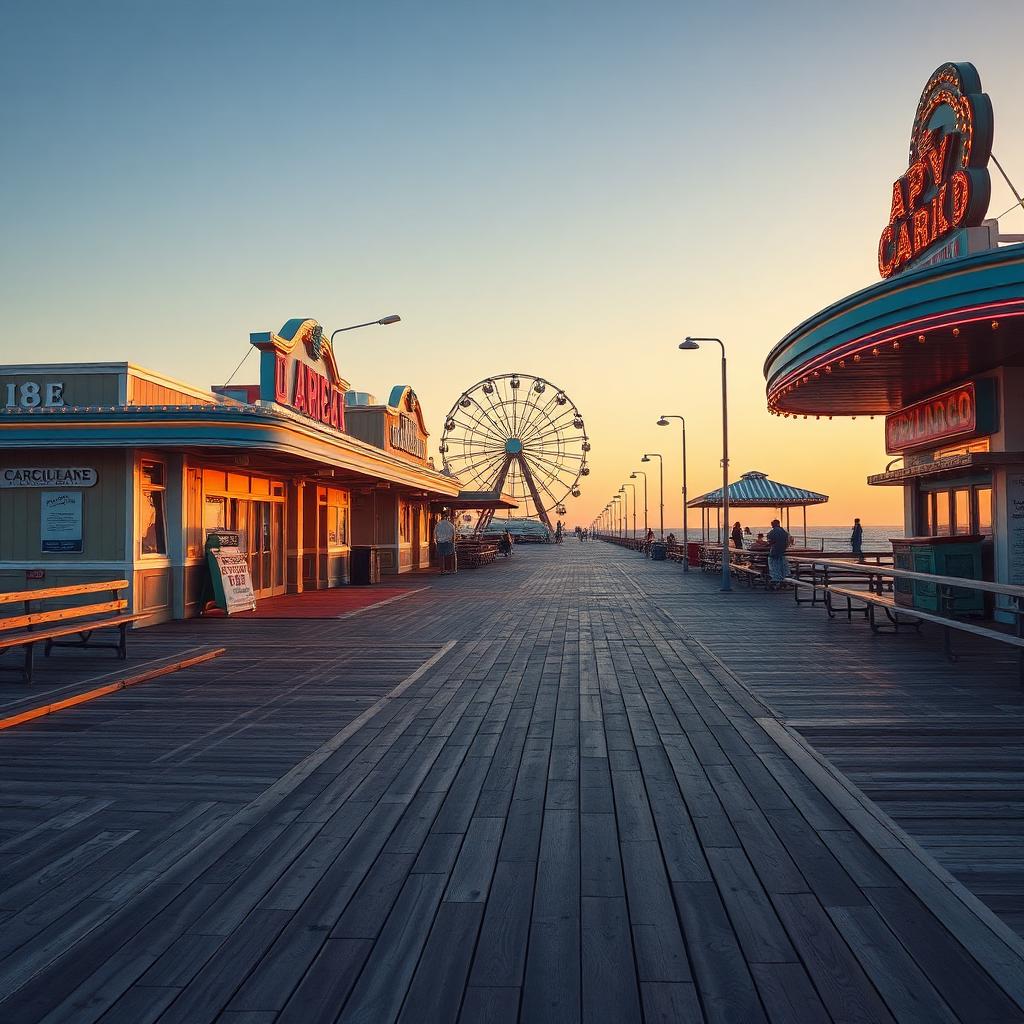
Boardwalk Footprints Shifted by Storms and Decades of Change
The current concrete path along the oceanfront feels like a permanent fixture of August, yet the ground beneath the modern strollers and benches holds a map that no longer exists. For those looking cl…
By Shelly Winner, Editor
The current concrete path along the oceanfront feels like a permanent fixture of August, yet the ground beneath the modern strollers and benches holds a map that no longer exists. For those looking closely at the layout of the town’s central strip, the skyline we see today is a relatively recent development, forged more by Atlantic weather patterns than by the original blueprints of the early 20th century.
Walking the boards during the height of the summer season, it is easy to assume the shops and walkways have always sat exactly where they are now. However, the history of this island hub is one of constant repositioning. The early 1900s footprint was drastically different from the reconstruction eras that followed major hurricanes, which forced a total rethink of how the town meets the tide.
🏔 Rebuilding the Skyline After the Storms
The transition from a vintage layout to the modern skyline was not a slow evolution, but rather a series of necessary resets. When powerful storms swept through in the mid-century and beyond, they did more than damage structures; they effectively erased the old boundaries of the boardwalk area. The reconstruction efforts that followed these events are what gave the strip its current elevation and architectural rhythm.
For longtime visitors, there is often a sense of "phantom" geography—remembering a building or a walkway that sat a dozen yards closer to the water or featured a different wooden grade. The modern version of the strip was designed with these hard-learned lessons in mind, creating a sturdier, more uniform look that residents and tourists now recognize as the heart of the community.
📚 Balancing Preservation with Necessary Progress
Understanding the evolution of the boardwalk helps frame the ongoing debate between keeping things the way they were and preparing for the future. The balance is delicate. While the vintage charm is what draws people back year after year, the physical reality of the island requires a footprint that can withstand the elements.
By our read, the current layout represents a successful compromise. It maintains the classic spirit of a seaside gathering place while acknowledging that the shoreline is never truly static. For residents, this means the boardwalk is not just a place for a summer stroll, but a testament to the town’s ability to rebuild and refine its most iconic asset.
🎡 Connecting the Modern Sight to the Past
Next time you are navigating the crowds or waiting for a snack near the main walkway, take a moment to look at the alignment of the buildings. The gaps between structures and the way the paths connect to the sand are all echoes of those post-hurricane decisions. The history isn't just in books; it is in the very height of the dunes and the placement of the pilings.
That is Carolina Beach. Beautiful, chaotic, and somehow still worth it.
What are your earliest memories of how the boardwalk used to look?