
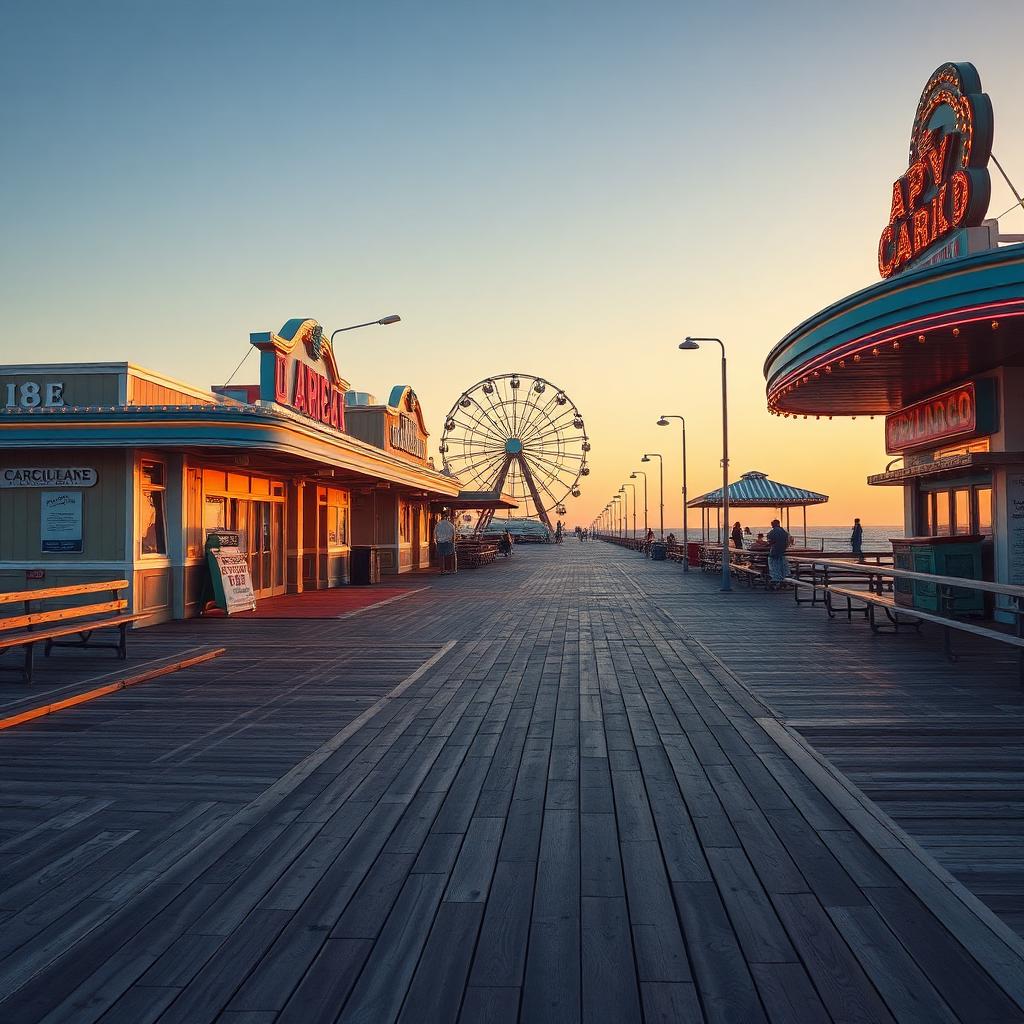
Boardwalk Planks Bear Traces Of Coastal History
Underneath the current elevated walkways and modern decking of the Carolina Beach Boardwalk lies a structural history defined by grit and repeated reconstruction. While visitors today enjoy a stabiliz…
By Shelly Winner, Editor
Underneath the current elevated walkways and modern decking of the Carolina Beach Boardwalk lies a structural history defined by grit and repeated reconstruction. While visitors today enjoy a stabilized path above the sand, the ground beneath them has seen multiple iterations of the island's most famous landmark rise and fall against the elements.
The evolution of this space is not just a matter of updated wood or better screws; it is a timeline of how the community responded to major shifts in the landscape. The early 20th-century versions of the boardwalk were characterized by wooden pavilions that served as the primary gathering spots for generations of families. These structures represented an era of architecture that felt more like a continuous porch over the dunes than the reinforced public infrastructure seen today.
🏗️ Reconstruction After The Storm
The most significant turning point for the boardwalk’s design came during the mid-1950s. Hurricane Hazel serves as the primary dividing line in the architectural history of the island. The storm's impact necessitated a total rethinking of how the boardwalk should be built and maintained. Post-Hazel reconstruction efforts focused on creating a structure that could better withstand the volatile environment of the coastline.
For longtime residents, the difference is tactile. There are those who remember the specific feel and sound of the planks they walked on as children, which differed significantly from the post-reconstruction versions. The height, the width of the boards, and the way the walkways connected to the surrounding businesses have all shifted as building codes and safety standards evolved over the decades.
🌊 Maintaining A Central Landmark
The modern boardwalk is a testament to the ongoing labor required to keep a wooden structure standing in a salt-air environment. It is a cycle of constant maintenance that has been passed down through generations of workers and town officials. Every few years, sections are replaced or reinforced to ensure the landmark remains the central hub for island life.
By our read, the current layout honors that history by maintaining the spirit of the old pavilions while acknowledging the realities of modern coastal engineering. It is a delicate balance between nostalgia and necessity. When looking at the boardwalk today, you are seeing the result of nearly a century of trial and error against the tide.
Honoring the effort required to maintain this central landmark over many generations is essential to understanding why the boardwalk looks the way it does today.
Whether it is the off-season in November or the peak of a busy summer, the boardwalk remains the heart of the island. Understanding the layers of history underneath the wood makes every walk along the planks feel a little more connected to the past. That is Carolina Beach: a place that keeps building, no matter what the Atlantic throws its way.
What are your earliest memories of walking these planks?