
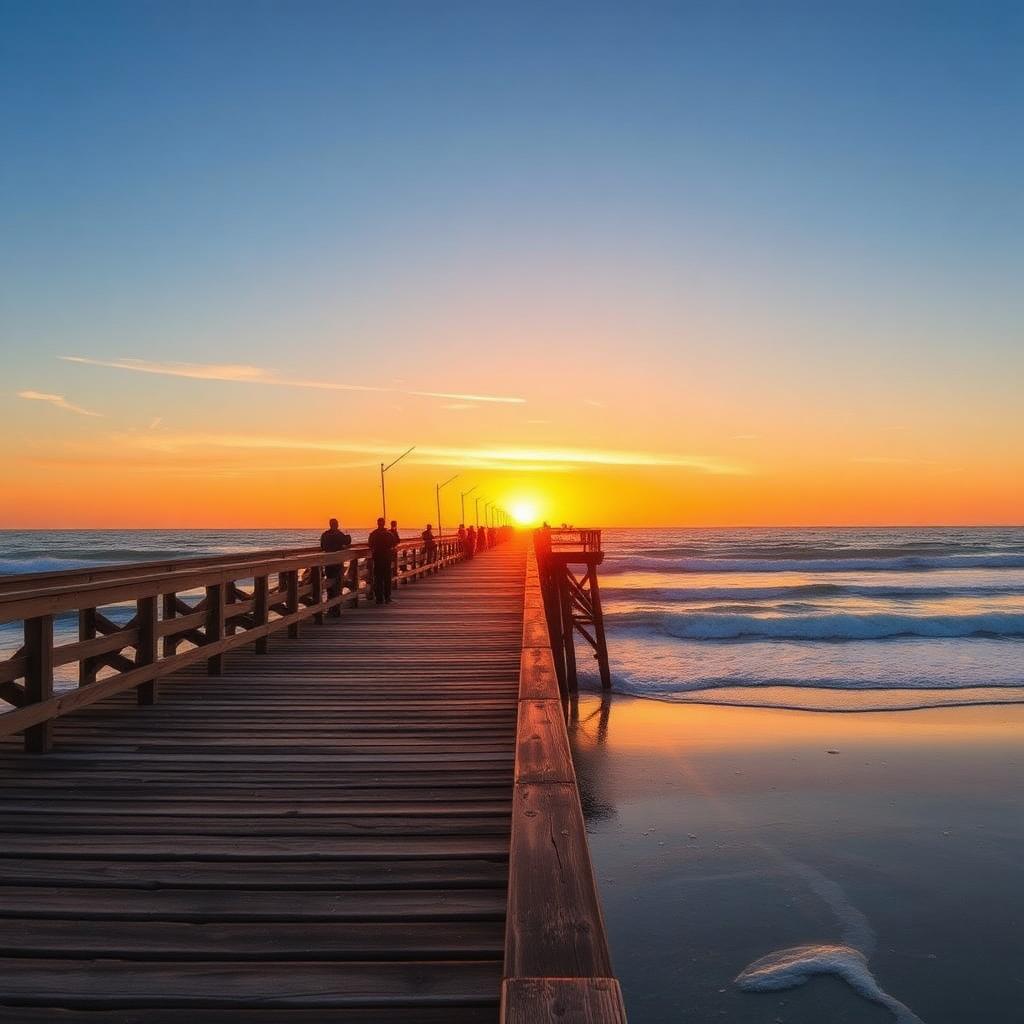
Carolina Beach Area Fishing Report — August 5, 2026
Spanish mackerel are heating up around the inlets and nearshore reefs, offering fast action for anglers this week.
By Shelly Winner, Editor
It's a hot August day on the southeastern North Carolina coast, and the fishing is heating up too! Along our surf and piers, including Carolina Beach Fishing Pier, Kure Beach Pier, and Johnnie Mercer's, anglers are finding good numbers of Spanish mackerel, bluefish, and sea mullet. The water temperature off Wrightsville Beach is a balmy 81.3°F, perfect for these summer species. Flounder season is open, and some nice flatfish are being caught, especially around structure and the tide changes.
Out near the inlets like Masonboro and the Cape Fear River mouth, and around our nearshore reefs such as AR-376 and the Liberty Ship, Spanish mackerel are putting on a show. Trolling small spoons and Gotcha Plugs has been very effective. We're also seeing some good catches of king mackerel, with larger fish starting to show up further offshore. Keep an eye out for schooling baitfish, as the predators won't be far behind.
In the backwater creeks and channels of Pleasure Island, Snow's Cut, and Masonboro Sound, the red drum bite remains consistent, especially around oyster bars and dock pilings. Live mud minnows or Gulp! baits are proving to be top choices. Speckled trout are also present in the deeper holes and along grass lines. For flounder, target those moving tides around submerged structure.
Down on the Brunswick County beaches, including Oak Island, Southport, and Bald Head Island, the surf fishing mirrors much of what we're seeing further north, with sea mullet and some pompano in the mix. Nearshore, the Spanish and king mackerel bite is strong, and there are reports of good action around the ledges and reefs for a variety of bottom fish.
If you're looking to hit the water, consider fishing the outgoing tide this afternoon, especially around the 19:38 low tide at Wrightsville Beach or the 22:10 low in the Cape Fear River. These moving water periods are often when the fish are most active, particularly for the inlet and nearshore species.