
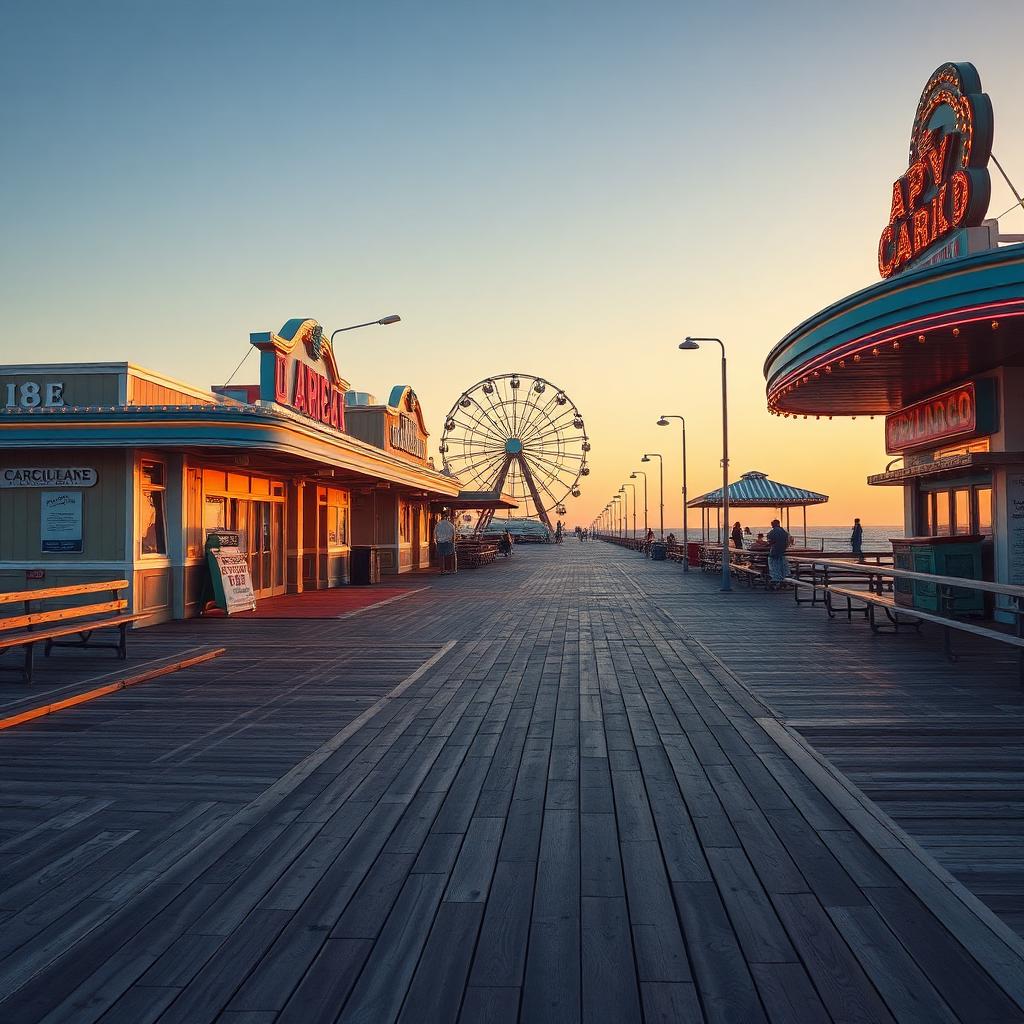
Coastal Storms Reshaped The Boardwalk Architecture
Black-and-white postcards from the early 20th century often confuse modern visitors who try to align those vintage images with the contemporary shoreline. The structures stretching over the sand today…
By Shelly Winner, Editor
Black-and-white postcards from the early 20th century often confuse modern visitors who try to align those vintage images with the contemporary shoreline. The structures stretching over the sand today do not match the narrow, private footpaths that once defined the oceanfront landscape.
For generations, the walk along the water was a fragmented experience. The transition from those early private piers to the expansive public access we recognize now was not a single choice, but a transformation forced by nature and refined by decades of rebuilding. The boards underfoot today represent a collective history of how the island adapts to the Atlantic.
🌀 Weathering The Mid-Century Shifts
The primary reason for the visual disconnect between old photos and modern reality lies in the architectural response to mid-century storms. High-energy weather events fundamentally altered what was possible to build and maintain on the edge of the island. These storms acted as a reset button for the shoreline, clearing away older, less resilient structures that had stood since the early 1900s.
When rebuilding began, the focus shifted toward durability and communal utility. The "classic" feel that people associate with the area today was actually forged during these recovery periods. By our read, the heavy timbers and wider walkways are a direct answer to the vulnerabilities exposed by those historic weather patterns.
🚧 From Private Paths To Public Space
Early maps of the area show a much different layout for those wishing to see the waves. Instead of a unified thoroughfare, the shoreline was dotted with private piers and individual access points. This created a jagged, inconsistent experience for anyone trying to navigate the coast.
The transition from private piers to public access helped shape the intentional rebuilding of the boardwalk over several decades.
Over time, local planning moved toward the unified structure that exists now. This shift ensured that the view and the walk were no longer reserved for a few, but were accessible to everyone visiting the island. For residents, this means the current layout is less of a static monument and more of a living project that has been refined through every major rebuilding effort.
📸 Reading The Modern Landscape
When looking at the boardwalk area today, it is worth noting that the intentional design choices made in the wake of past storms have created the specific atmosphere we enjoy. The height, the width, and even the placement of the boards were decided by people who had seen the previous versions swept away.
It helps to appreciate that the "old-fashioned" aesthetic is actually a testament to modern resilience. The next time you are comparing a phone photo to a museum print, remember that the differences are there for a reason. The island chose to build back stronger and more open, ensuring the walk stays put even when the weather turns.
That’s the beauty of how this place handles change. It keeps the spirit of the old footpaths while building something that can actually last.