
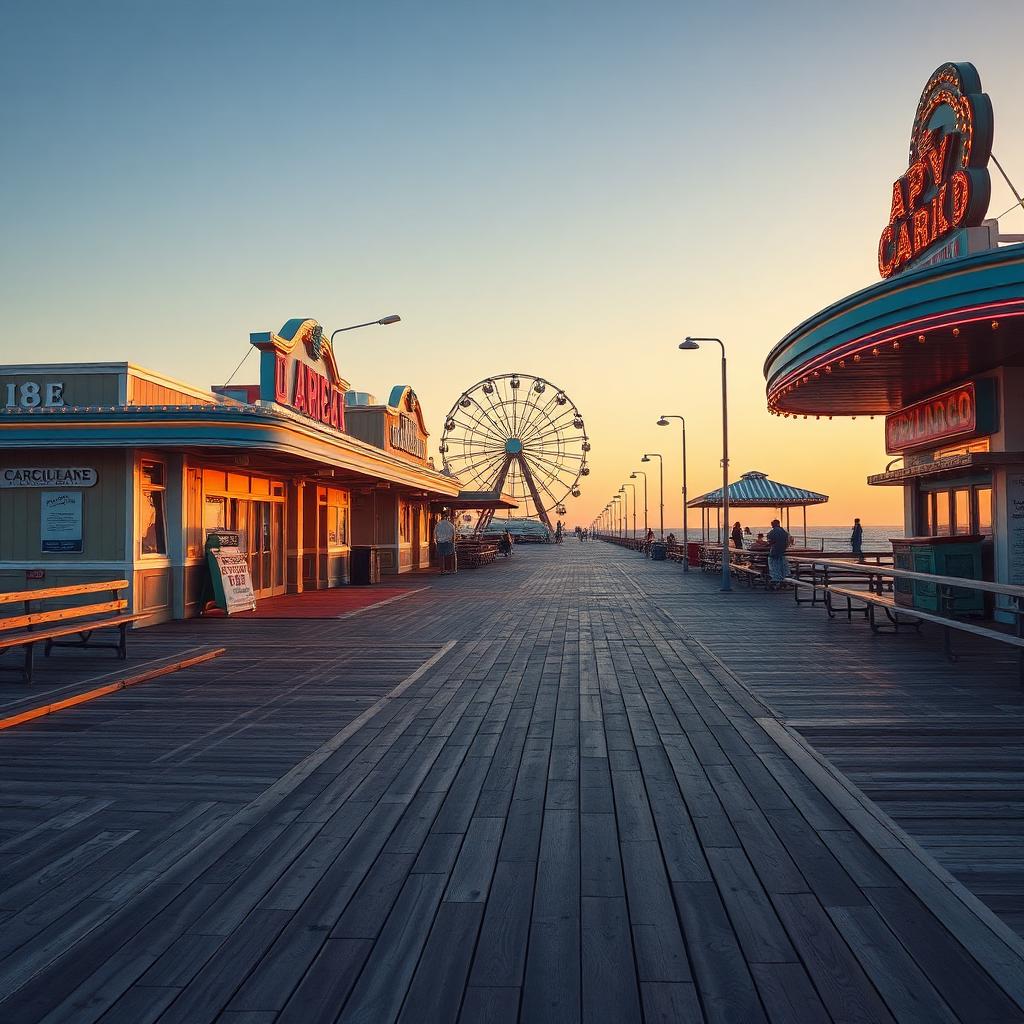
Footprints of the Mid-Century Amusement Era Still Define the Town Square
Underneath the current elevated walkways of the boardwalk area, the physical layout of the town square remains remarkably consistent with the map locals would have recognized seventy years ago. While …
By Shelly Winner, Editor
Underneath the current elevated walkways of the boardwalk area, the physical layout of the town square remains remarkably consistent with the map locals would have recognized seventy years ago. While the structures above have transitioned from a mid-century amusement center to a modern coastal destination, the underlying footprints tell a story of architectural continuity that survives every renovation cycle.
The evolution from the old wooden planks to the current reinforced surfaces is more than just a matter of sturdier materials. For long-time residents, the transition is marked by the loss of specific sensory triggers—the rhythmic, hollow drumming of footsteps on weathered wood and the distinct scent of salt-soaked timber that once defined a summer afternoon walk toward the ocean. These details are the connective tissue between the island's past and its present identity.
🎡 Architectural Evolution Over the Decades
The shift from the mid-century era did not erase the town’s original design; rather, it layered new needs over a historic foundation. The town square serves as an enduring anchor, maintaining a familiar flow of movement even as the businesses and attractions surrounding it have cycled through different iterations. By our read, this layout is the most significant artifact we have, acting as a blueprint that dictates how visitors and families interact with the space today.
For those who grew up here, the boardwalk area represents a bridge between generations. The modern renovations were necessary to preserve the landmark's integrity against the elements, but the "original footprints" ensure that the spatial experience remains grounded in history. Watching the transition of this iconic landmark offers a unique perspective on how coastal towns balance the demands of modern tourism with the preservation of local character.
🌊 What to Watch in the Modern Layout
The bigger picture reveals that while the sights have changed, the spirit of the boardwalk area is tied to its specific geometry. The way the town square opens up to the beach creates a natural gathering point that has functioned the same way for nearly a century. This architectural persistence is why the area feels so familiar even to those who haven't visited in decades.
Worth noting is how the modern layout honors the mid-century era’s focus on entertainment and public access. For residents, this means that while the specific sounds of the old planks are gone, the social heart of the island remains exactly where it was intended to be. It connects modern visitors to the architectural evolution of the town's most iconic landmark without losing the essence of what made it a destination in the first place.
That’s the reality of life here—we build for the future while walking on the exact same paths that defined the island’s earliest days. What would you add to the list of memories from the old wooden era?