From Liberty Ships to Ocean Breezes: How Wilmington’s Shipyard Boom Shaped Carolina Beach
During World War II, Wilmington's booming shipyards employed over 20,000 workers. Their weekend escapes to Pleasure Island laid the groundwork for Carolina Beach's post-war tourism boom.
By Shelly Winner, Editor
In the spring of 1941, the North Carolina Shipbuilding Company set up shop along the Cape Fear River in Wilmington. Within months, the emergency yard transformed the regional economy, launching its first Liberty ship, the *Zebulon B. Vance*, that December. Over the course of the war, more than 20,000 workers labored around the clock at the shipyard, constructing 243 vessels to support the Allied effort.
All those workers carried paychecks, and on their rare days off, they needed somewhere to unwind. Just down the road, Carolina Beach became the natural pressure valve for the boomtown upriver. While the Cape Fear coast maintained strict blackouts to guard against German U-boats hunting off the shores, shipyard employees, merchant mariners, and troops stationed at nearby Camp Davis poured onto Pleasure Island for brief reprieves of music, sea air, and ocean swimming.
The wartime influx kept Carolina Beach’s cottages, boarding houses, and diners bustling through years when civilian travel was otherwise curtailed by gasoline and rubber rationing. When the war ended in 1945 and the shipyard wound down operations, thousands of former defense workers chose to stay in southeastern North Carolina. Having fallen in love with the coast during quick weekend escapes, many invested their savings directly into Carolina Beach, building modest cinderblock beach cottages and opening mom-and-pop shops.
That momentum carried Carolina Beach straight into its mid-century golden age. The 1950s saw a surge in motor courts, amusement rides, and pavilion dancing, as the families of former wartime welders, pipefitters, and riveters returned year after year as summer regulars. The industrial muscle that helped win the war on the Cape Fear River had quietly laid the foundation for the beach town's enduring tourism boom.
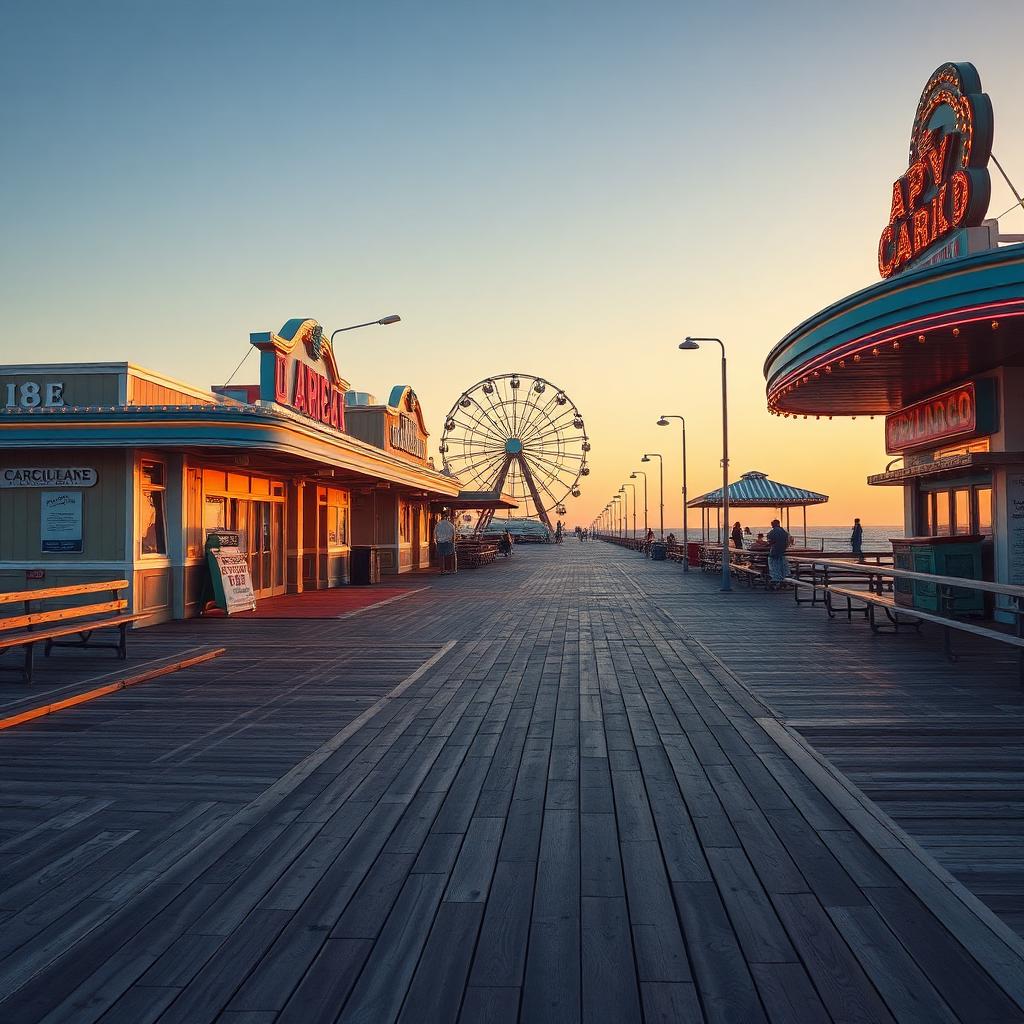
Today, you can still trace that wartime connection across the water. Across the river in downtown Wilmington rests the battleship USS *North Carolina*, preserved as a memorial to the era that reshaped the region. And down on Pleasure Island, a stroll through the residential streets behind the Carolina Beach Boardwalk reveals dozens of those sturdy, mid-century concrete-block cottages—practical coastal homes built by the hands and savings of the generation that answered the call.