
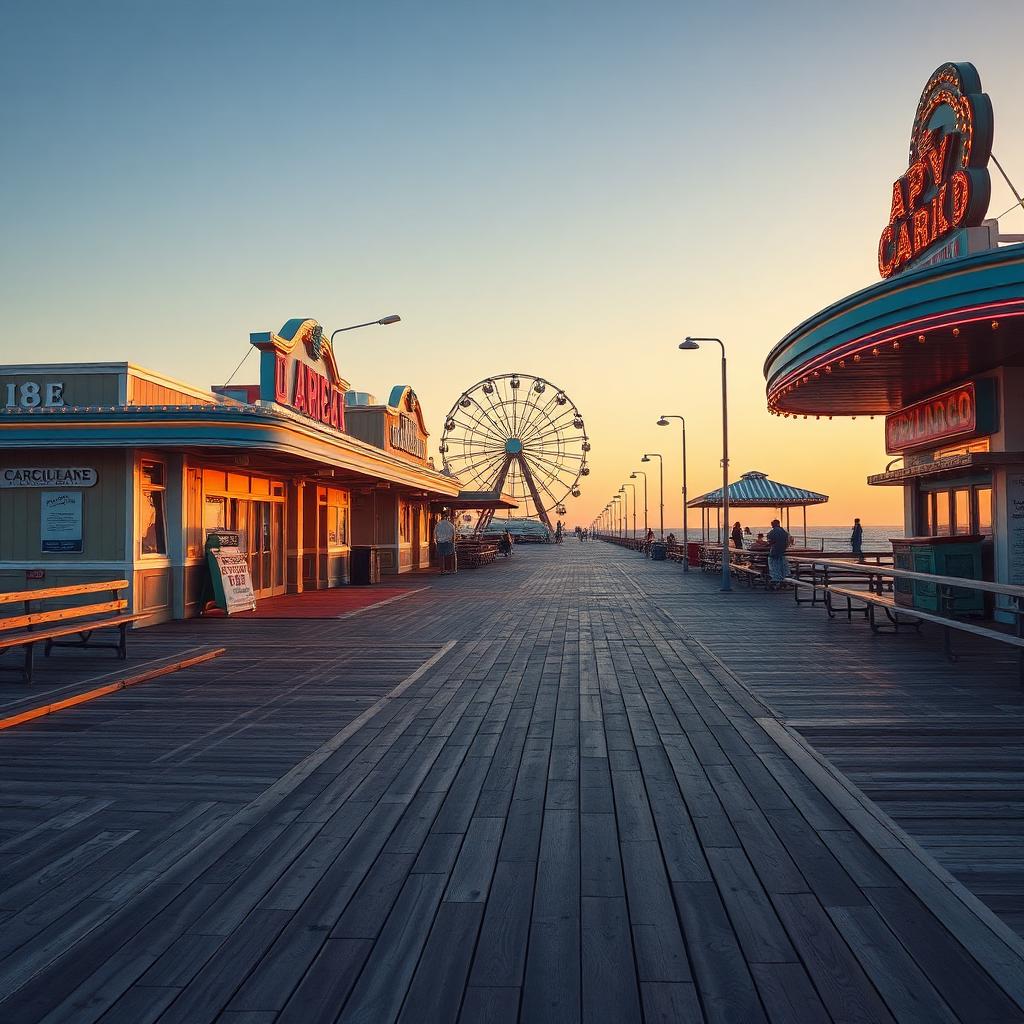
How Hurricane Hazel Reshaped the Shoreline of Pleasure Island
When Hurricane Hazel struck on October 15, 1954, its historic storm surge leveled the oceanfront, but Carolina Beach's rapid post-storm rebuilding reshaped the town into the community we know today.
By Shelly Winner, Editor
On October 15, 1954, Carolina Beach Police Chief C. A. Rogers and local officials oversaw the evacuation of roughly 2,000 residents as Hurricane Hazel roared toward the North Carolina coast. When the Category 4 storm made landfall near the state line between Calabash, North Carolina, and Little River, South Carolina, it pushed an unprecedented storm surge straight across Pleasure Island. Wind gusts exceeded 120 miles per hour, and sea water poured through the streets, completely submerging the low-lying island.
By the time the surge receded, the town’s landscape had been transformed in a matter of hours. The beloved boardwalk was largely splintered and swept away, alongside hundreds of oceanfront cottages, pavilions, and seaside businesses. Heavy sand dunes were leveled and pushed hundreds of yards inland into front parlors and across Carolina Beach Avenue. Across the coastal town, municipal officials later estimated that a significant portion of all existing structures were either severely damaged or totally destroyed.
Yet the community refused to let Pleasure Island wash away. Within days, bulldozers, military engineers, and returning townspeople began clearing mountains of sand and debris from main thoroughfares. Insurance payouts, emergency aid, and sheer local resolve fueled an aggressive rebuilding campaign throughout the winter and spring. The town seized the disaster as a chance to modernize, replacing ramshackle wooden piers and aging boardwalk arcades with sturdier construction and fresh mid-century architecture designed to withstand future squalls.
That determined post-Hazel rebuilding wave defined the character of modern Carolina Beach. Today, when you walk the concrete paths of the vibrant Carolina Beach Boardwalk, browse the mid-century storefronts along Harper Avenue, or step out onto the rebuilt fishing piers, you are walking on the very footprint of the community that refused to surrender to Hazel’s tide.