
How wartime Shipyards Sparked the Carolina Beach Mid-Century Boom
Wilmington's booming World War II shipyards and regional military bases brought thousands of workers to Pleasure Island, sparking the post-war building boom that defined modern Carolina Beach.
By Shelly Winner, Editor
In the spring of 1941, the North Carolina Shipbuilding Company set up operations along the Cape Fear River in Wilmington. Over the next five years, the emergency yard transformed into a round-the-clock industrial powerhouse, launching 243 ships—most of them Liberty and C2 cargo vessels—to support the Allied war effort. At its peak, the yard employed more than 20,000 workers, drawing men and women from across the state into the coastal lowcountry.
Just a dozen miles down the river road, Carolina Beach felt the impact immediately. Thousands of shipyard workers, along with soldiers stationed at nearby Camp Davis in Holly Ridge and the Fort Fisher training center at the island's tip, needed places to live, blow off steam, and spend their war wages. Local boarding houses filled to capacity, cottage rentals remained booked solid through winter, and open-air dance pavilions sprouted along the boardwalk to cater to the off-shift crowds.
When the war ended and defense manufacturing wound down, the influx didn't simply pack up and leave. Having grown familiar with Pleasure Island during their weekend leaves and shipyard days off, hundreds of former workers and veterans returned to settle permanently or invest in summer properties. That wartime momentum laid the groundwork for the town's mid-century expansion, spurring new motor courts, mom-and-pop seafood grills, and family cottages along Lake Park Boulevard throughout the late 1940s and 1950s.
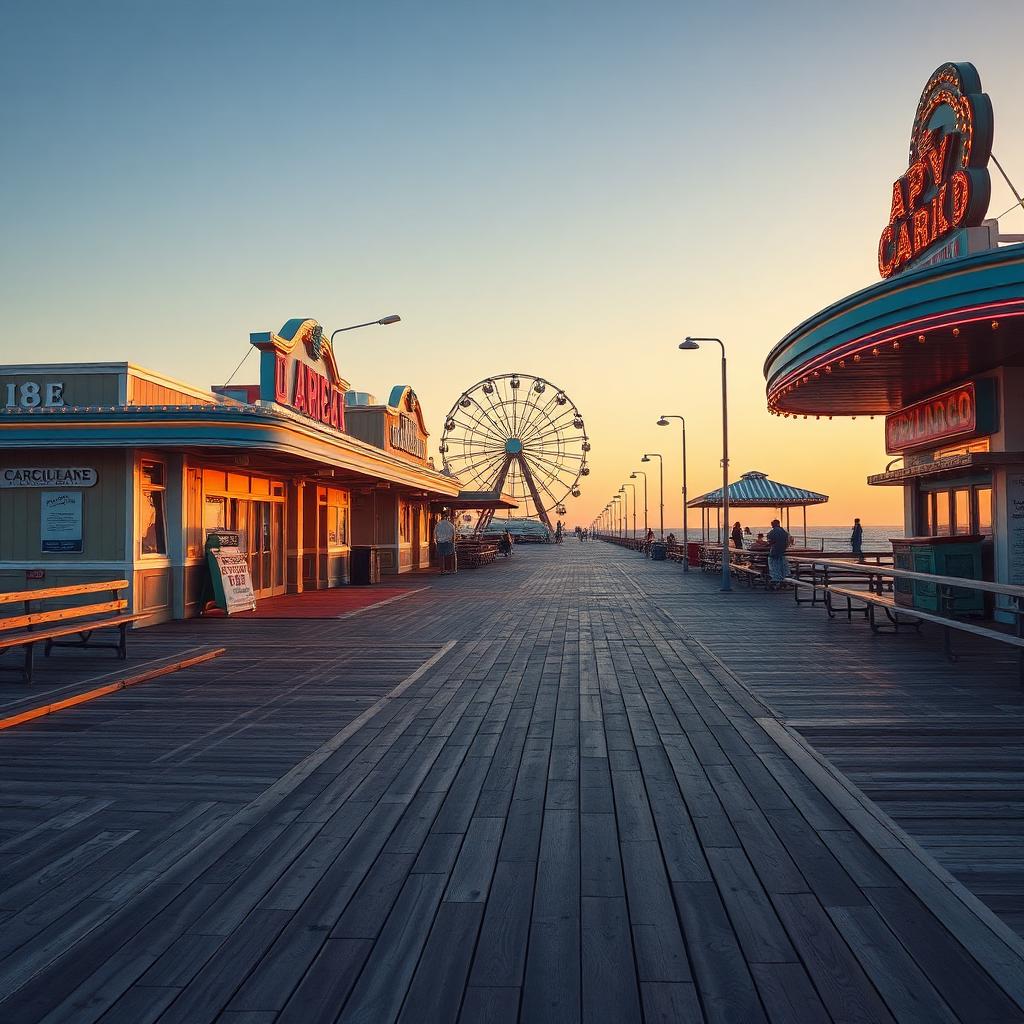
Across the Cape Fear River, the retired battleship USS North Carolina arrived at her permanent Wilmington berth in 1961, serving as a towering monument to that wartime era. But you can feel the direct legacy right here on Pleasure Island. Walk down to the Carolina Beach Boardwalk or drive past the vintage cinder-block cottages standing along Carolina Beach Avenue North; they survive as reminders of the sudden influx of families who built modern Carolina Beach out of a wartime boom.