
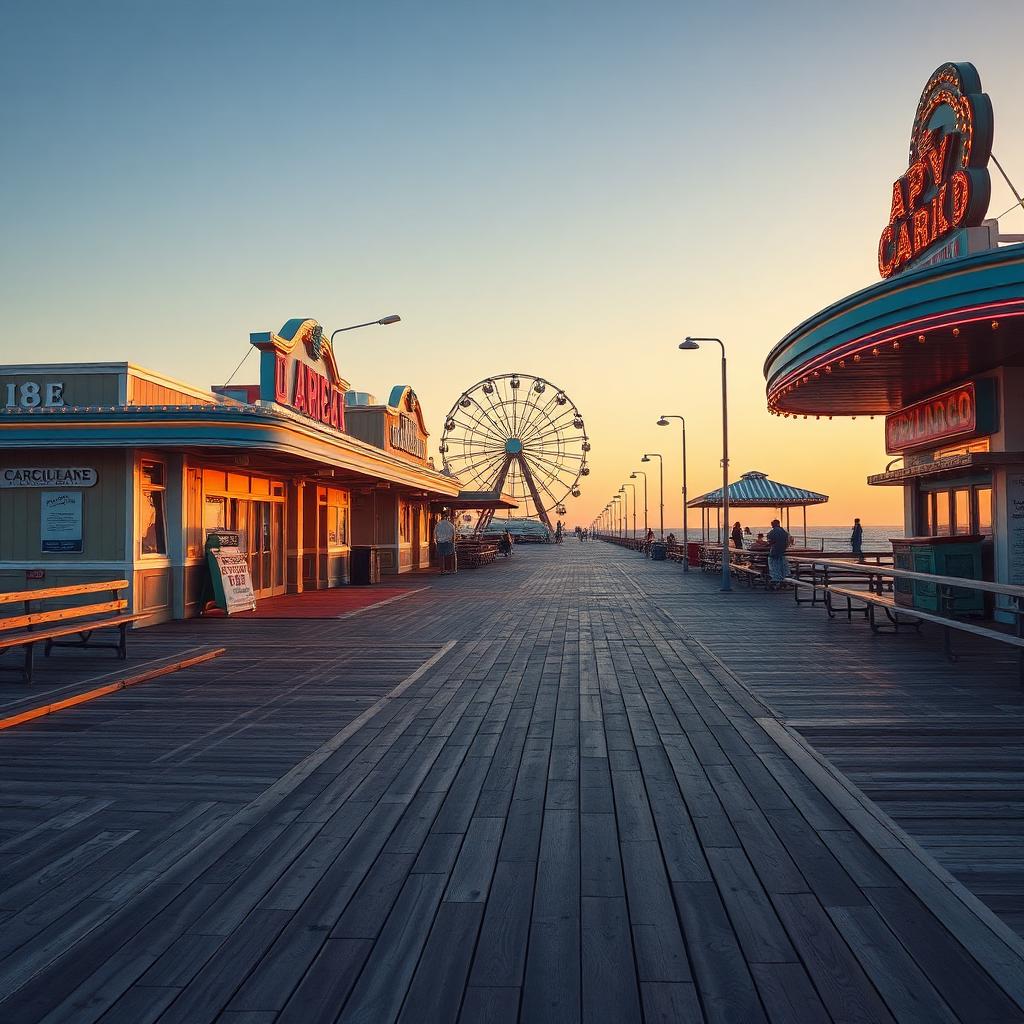
Hurricane Hazel Footprints Defined the Boardwalk Layout
The wooden planks underfoot this September follow a path set not by modern urban planners, but by the devastating force of a 1954 storm. While the Carolina Beach Boardwalk has seen significant upgrade…
By Shelly Winner, Editor
The wooden planks underfoot this September follow a path set not by modern urban planners, but by the devastating force of a 1954 storm. While the Carolina Beach Boardwalk has seen significant upgrades in recent years, the physical footprint of the social hub remains a living map of the post-Hurricane Hazel rebuilding effort.
Walking the boards in the late-summer heat, it is easy to assume the tight turns and specific placements of the walkways were designed for modern foot traffic. In reality, the community’s resilience after the mid-century storm dictated the layout. When the town began to put itself back together, the decision to preserve the original footprints of the structures and walkways solidified a design that feels distinct from the sprawling, wide-open piers found at other coastal destinations.
🏖 Preservation Through Rebuilding
The layout of the boardwalk area is a direct result of the choices made during the recovery from Hurricane Hazel. Rather than clearing the slate for a different style of development, the town maintained the existing property lines and walkways as they stood before the water rose. This historical continuity explains why the area feels intimate and connected to the past, even as the buildings surrounding it change.
By keeping the layout intact, the town preserved the social flow of the boardwalk. The proximity of the shops and the specific way the walkways intersect encourage a slower pace. For those visiting this month, noticing these enduring design features offers a perspective on how the town's social center has survived decades of environmental shifts and economic changes.
🎡 Resilience in Design
There is a specific feeling to the way the boardwalk area is structured—a sense of permanence that contradicts its proximity to the shifting tides. This is not accidental. The post-Hazel reconstruction focused on stability while honoring the community's history. The result is a hub that serves as a bridge between the mid-century beach experience and the present day.
The enduring layout of the boardwalk serves as a reminder of the town's ability to rebuild without losing its core identity.
As the fall season begins, the enduring architecture of the boardwalk remains the island's primary gathering place. The resilience of the footprint ensures that even as new businesses arrive and seasons change, the fundamental experience of the boardwalk remains familiar to those who have walked it for generations.
That’s Carolina Beach. Beautiful, chaotic, and somehow still worth it.