
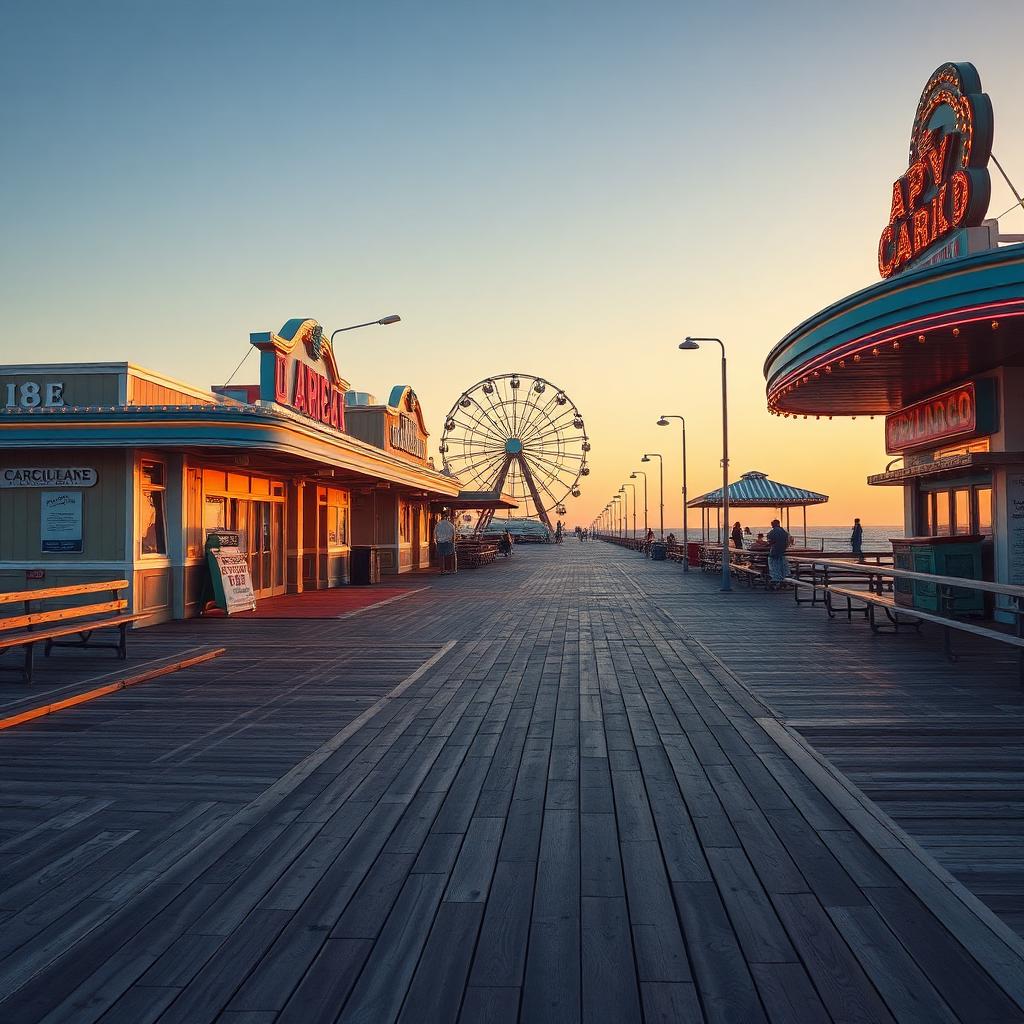
Rhythm on the Boardwalk: How Carolina Beach Helped Shape the Shag
From mid-century wooden pavilions to the Boardwalk today, Carolina Beach helped shape the smooth footwork of the Carolina Shag and the enduring rhythm of beach music.
By Shelly Winner, Editor
In the late 1940s, a jukebox loaded with rhythm and blues records at Malcolm “Chick” Matteau’s pavilion on the Carolina Beach boardwalk became an unlikely cradle for a southern cultural phenomenon. Teenagers shedding their sand-caked shoes gathered on the wooden floors to dance to race records that were rarely played on mainstream white radio stations at the time.
What those dancers developed was a smooth, relaxed six-count variation of the Lindy Hop and jitterbug that came to be known as the Carolina Shag. With knees flexed, torsos upright, and intricate footwork gliding across sawdust-dusted floors, couples moved to medium-tempo blues, doo-wop, and jump blues. Carolina Beach pavilions like the Bop Shop and dance halls run by local promoters helped spread the steps alongside spots down in Ocean Drive and Myrtle Beach, sparking a friendly regional rivalry over who could claim true paternity of the dance.
The music fueling the footwork became known simply as “beach music.” Drawn from artists like the Clovers, the Dominoes, and Ruth Brown, the sound was defined by swinging horn sections, syncopated beats, and an easygoing tempo hovering between 110 and 130 beats per minute. For post-war vacationers, the music and the dance became inextricably tied to the salty air and casual freedom of coastal North Carolina.
By the 1970s and 1980s, the revival of the scene solidified the dance’s legacy, culminating in the Carolina Shag being officially designated as the state popular dance of North Carolina in 2005. The dance that started in cramped beachside pavilions grew into regional society clubs, national competitions, and a permanent fixture of southern beach culture.
Today, you can still trace those early steps right along the Carolina Beach Boardwalk, where outdoor music and community shag nights keep the tradition alive. Standing near the pavilion gazebos on a summer evening, you will still see barefoot dancers sliding across the planks to that familiar swinging backbeat, carrying on a local ritual that has kept time by the ocean for more than seventy-five years.