
Rising from the Ash: How the 1940 Fire Reshaped the Carolina Beach Boardwalk
In 1940, a devastating fire leveled the Carolina Beach boardwalk, sparking a resilient post-war rebuilding effort that created the mid-century oceanfront strip visitors know today.
By Shelly Winner, Editor
In the early morning hours of September 1, 1940, flames broke out inside the Greystone Inn near the heart of the Carolina Beach boardwalk. Fueled by coastal breezes and decades of dry seaside timber, the blaze tore quickly through the tightly packed wooden amusement strip, leaping from roof to roof before daybreak.
By the time volunteer firefighters from Carolina Beach and neighboring Wilmington brought the inferno under control, several square blocks of oceanfront businesses lay in smoldering ruins. The disaster consumed iconic landmarks of the early resort era, including hotels, arcades, and open-air pavilions. It was, up to that point, the most destructive fire in the town’s young history, striking just as the busy Labor Day weekend crowds were gathering.
Rather than shutter the resort, local business owners and town leaders treated the catastrophe as a clean slate. Within months, cleanup crews cleared the ash, and merchants drafted blueprints for a sturdier, modern entertainment district. The onset of World War II briefly slowed construction materials, but the demand for recreation by thousands of soldiers stationed at nearby Camp Davis and Fort Fisher accelerated investment in the strip.
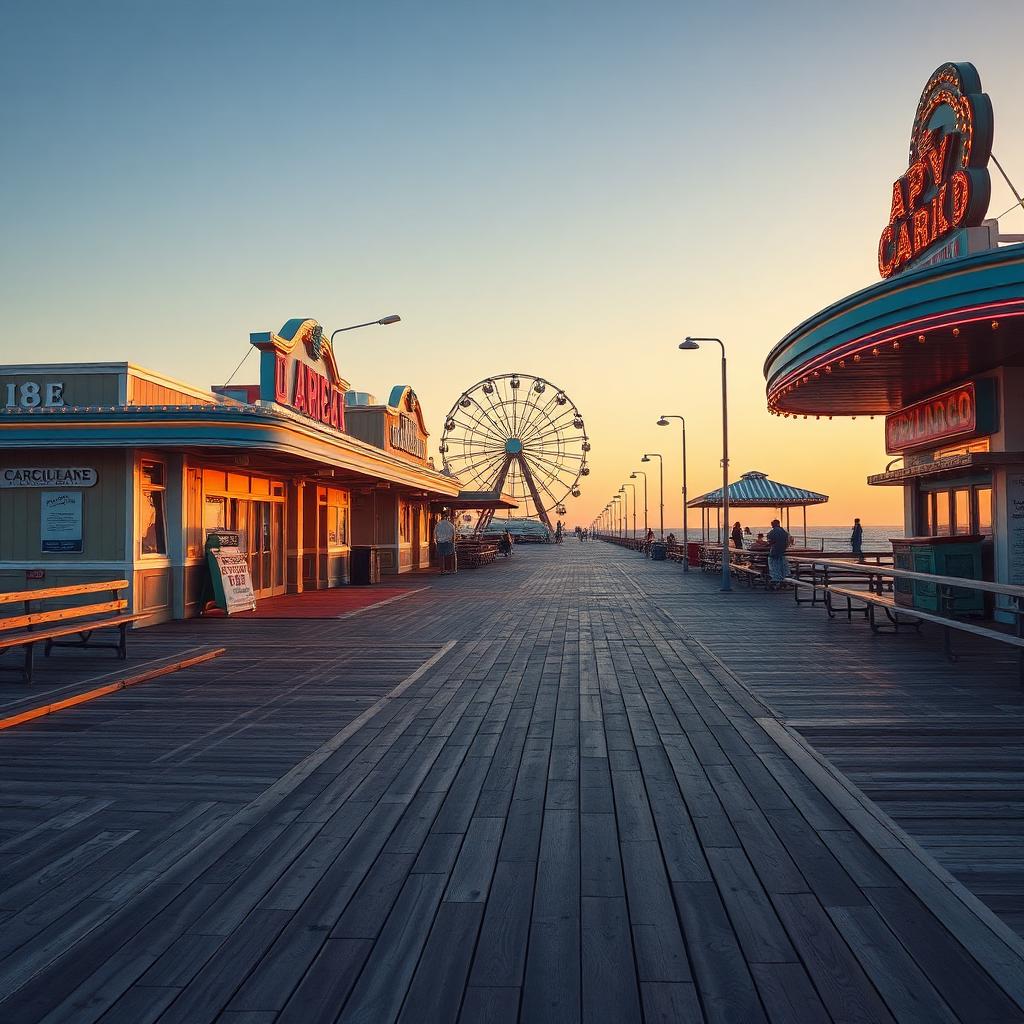
The post-fire rebuilding effort permanently reshaped the oceanfront into the vibrant mid-century promenade remembered today. Out went the fragile wooden shacks, replaced by cinderblock and brick storefronts designed to better withstand both fires and hurricanes. When the post-war boom arrived in the late 1940s, the resurrected boardwalk was ready, packed with neon signs, open-air snack stands, and bustling carnival rides that defined seaside summer vacations for a new generation.
Today, visitors who stroll the paved boardwalk between Harper Avenue and Cape Fear Boulevard are walking the exact footprint of that post-1940 reconstruction. While the wooden planks were replaced with a modern concrete pathway in recent years, the tight-knit lineup of fudge shops, arcades, and walk-up food windows still reflects the resilient blueprint drawn up after the town’s trial by fire.