
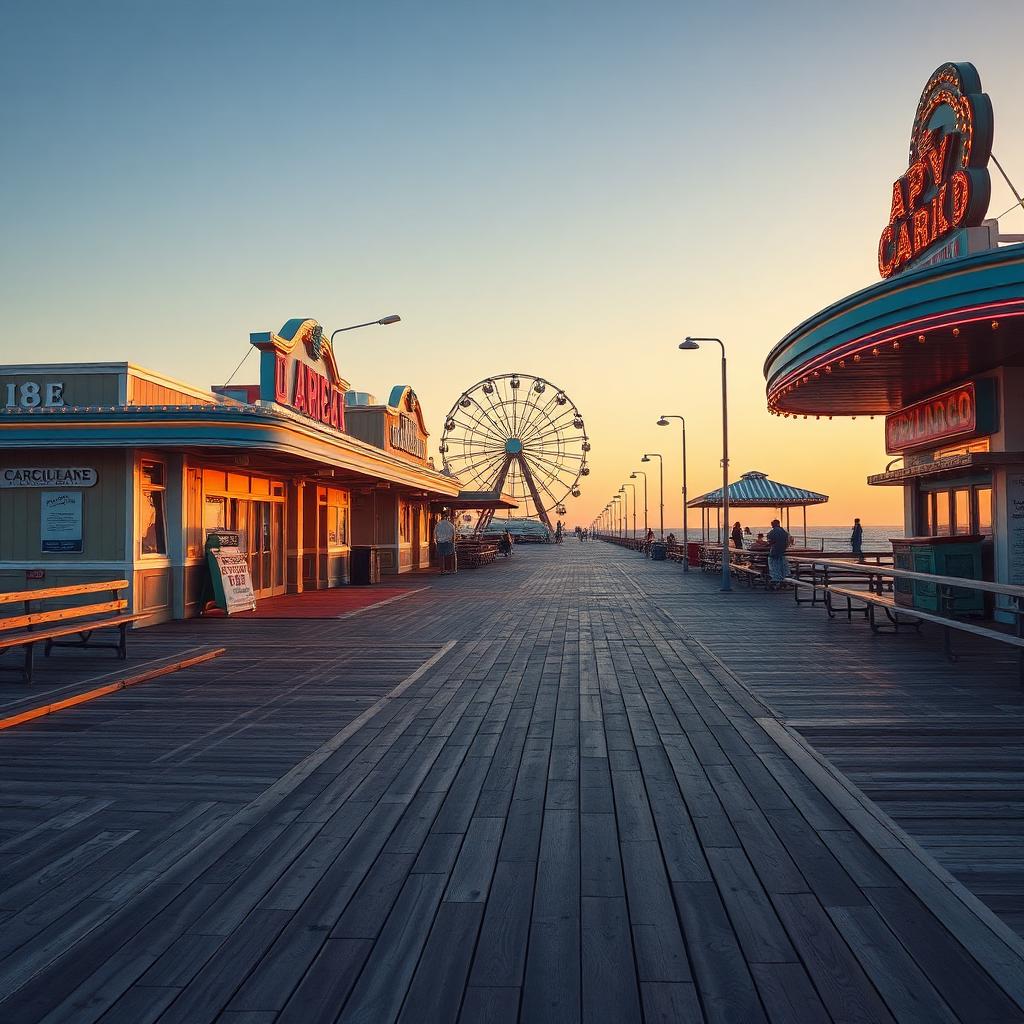
Rising from the Ashes along the Oceanfront Boardwalk
When a massive Labor Day fire gutted the Carolina Beach boardwalk in 1940, the town quickly cleared the ash and rebuilt with concrete and brick, shaping the beloved strip we know today.
By Shelly Winner, Editor
On the evening of September 1, 1940, thousands of holiday visitors were packing the Carolina Beach oceanfront for Labor Day weekend when smoke began pouring from the heart of the wooden boardwalk. Within minutes, flames swept through the tightly packed rows of frame pavilions, bathhouses, arcades, and confectioneries. The town’s fledgling volunteer fire brigade quickly called for aid from Wilmington, twenty miles north, but ocean breezes turned the blaze into a wall of fire that consumed several entire blocks of beachfront businesses.
By the following morning, almost the entire original amusement district lay in smoking ruins. Losses climbed into the hundreds of thousands of dollars, a devastating blow for a coastal town that had only incorporated fifteen years earlier in 1925. Yet property owners and municipal leaders did not hesitate; clearing crews moved in almost immediately, and plans were drawn up to replace the ash with something much sturdier before the 1941 summer season arrived.
The rebuilding marked a turning point in how Carolina Beach was constructed. Gone were the fragile, untreated wooden shacks that had defined the town’s early resort era. In their place arose masonry, concrete block, and brick storefronts designed to withstand both coastal storms and stray sparks. When World War II ended and returning service members flocked back to the coast, this modern, hardened strip became the beating heart of Pleasure Island’s post-war tourism boom.
Today, you can trace that recovery beneath your feet along the paved pedestrian walkway of the Carolina Beach Boardwalk. While the rides and neon signs have evolved over the decades, the compact footprint of brick-and-mortar restaurants, fudge shops, and arcades facing the Atlantic exists because of the resilient town that rose from the ash of 1940.