
Rising from the Surge: The Storm That Rebuilt Carolina Beach
When Hurricane Hazel struck on October 15, 1954, it swept away hundreds of beachfront cottages in Carolina Beach, prompting an immediate rebuilding effort that defined modern Pleasure Island.
By Shelly Winner, Editor
On the morning of October 15, 1954, Carolina Beach Police Chief C. A. Rogers and local officials made one final sweep across the island, urging the last remaining residents to evacuate across the bridge to the mainland. A few hours later, Hurricane Hazel made landfall near the North Carolina–South Carolina state line as a massive Category 4 storm. The timing could not have been worse: the storm surge coincided precisely with the highest lunar spring tide of the autumn, sending a wall of Atlantic water tearing across the town.
When the ocean surged inland, it reached depths of several feet along Carolina Beach Avenue North and South. The historic boardwalk pavilion area, filled with bowling alleys, open-air concessions, and seaside dance halls, took the brunt of the assault. Mainstream state records estimate that around 350 oceanfront cottages and commercial buildings in Carolina Beach were completely leveled, while hundreds more were knocked off their foundations and shoved toward the lake.
In the days following the disaster, Governor William B. Umstead mobilized the North Carolina National Guard to secure the island and prevent looting while displaced townspeople sifted through the wreckage. Bulldozers began carving roads through feet of washed-over sand, clearing tangled heaps of timber, telephone poles, and boardwalk lumber. For a coastal community that had spent decades establishing itself as a favorite mid-century family resort, the devastation was staggering.
Yet the rebuilding began almost immediately, forever changing the architectural fabric of Pleasure Island. Local leaders and property owners drew up plans for sturdier construction, replacing fragile ground-level beach cottages with higher pilings and reinforced concrete block foundations. The classic mid-century flat-roofed concrete motels and elevated coastal cottages that sprang up through the late 1950s became a direct response to Hazel’s storm surge.
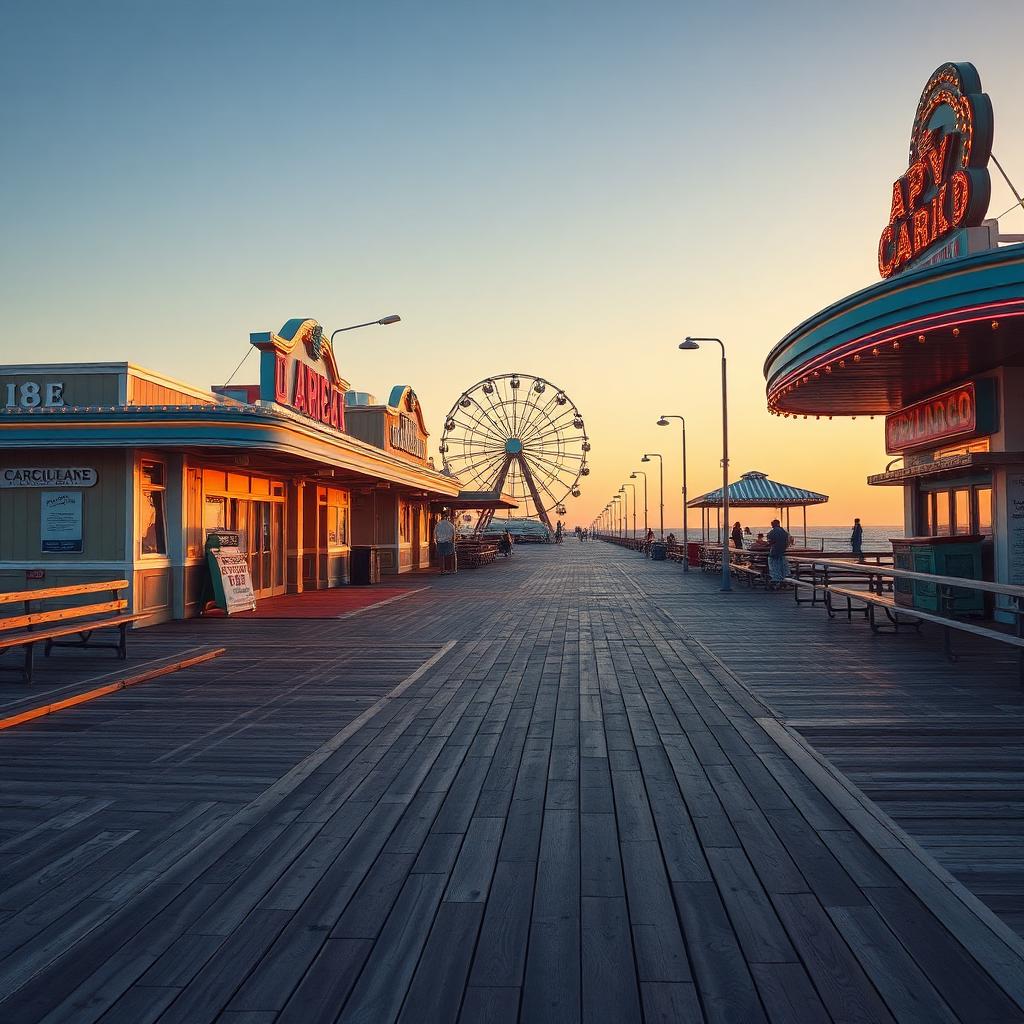
Today, visitors strolling the Carolina Beach Boardwalk can still trace the enduring line of that recovery. The modern promenade stands on the very ground cleared by Hazel’s surge, flanked by the resilient mid-century commercial footprint and elevated beachfront homes designed to withstand the temper of the Atlantic.