Stormwater and Drainage: How Carolina Beach Manages Water on a Barrier Island
A plain-English look at how Carolina Beach manages island drainage, tackles infrastructure upgrades, and works with state CAMA permits to handle coastal stormwater.
By Shelly Winner, Editor
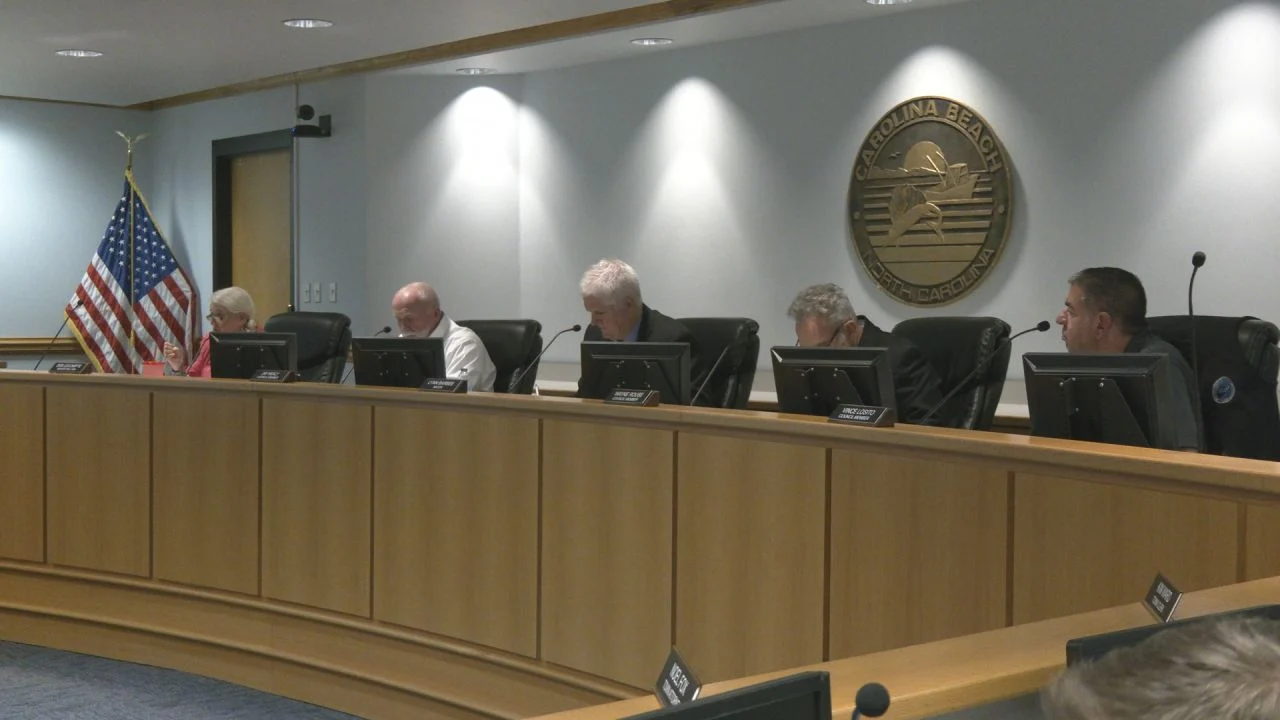
Under Carolina Beach’s council-manager form of government, the elected Town Council sets policy and adopts local stormwater rules, while the town manager and municipal staff oversee the daily operation and maintenance of our drainage systems. This division of responsibility ensures that long-term environmental planning translates directly into on-the-ground public works projects.
Managing stormwater on a barrier island comes with distinct natural challenges. Carolina Beach sits between the Atlantic Ocean and the Cape Fear River, where low-lying topography, sandy soils, and high water tables leave little room for heavy rainfall to soak away naturally. Compounding this is coastal tidal influence, where king tides and storm surges can temporarily push saltwater backward into drainage outfalls, slowing down gravity-fed runoff.
To address these conditions, municipal infrastructure efforts focus on keeping runoff moving and expanding storage capacity. The town maintains a network of catch basins, culverts, underground pipes, swales, and retention ponds designed to channel rainwater away from roadways and neighborhoods. Upgrades frequently involve replacing undersized or aging pipes, stabilizing drainage canals, installing backflow valves to block incoming tides, and using pump stations to lift water out of flood-prone areas when gravity alone is not enough.
Because our island borders sensitive coastal waters, major stormwater improvements cannot happen without state coordination. North Carolina's Coastal Area Management Act (CAMA) requires permits for development and infrastructure projects located within designated Areas of Environmental Concern. Town projects that alter shorelines, outfall directly into coastal sounds, or handle substantial runoff must comply with CAMA standards, which are enforced to protect water quality, limit erosion, and preserve public marshes and beaches.
Residents looking for the most current capital project updates, stormwater master plans, or guidance on reporting localized street flooding can find official resources directly through the town website at https://www.carolinabeach.org.