The Surge That Reshaped Carolina Beach: The Legacy of Hurricane Hazel
On October 15, 1954, Hurricane Hazel made landfall with a seventeen-foot storm surge, leveling oceanfront cottages and flattening the Carolina Beach Boardwalk. The post-storm rebuilding reshaped Pleasure Island into a modern mid-century coastal getaway.
By Shelly Winner, Editor
On the morning of October 15, 1954, a storm surge estimated at over seventeen feet struck Carolina Beach, coinciding precisely with the highest astronomical spring tide of the year. That wall of water belonged to Hurricane Hazel, an intense Category 4 storm that made landfall near the North Carolina–South Carolina state line. Packing sustained winds well over 130 miles per hour, Hazel permanently altered the geography and architecture of Pleasure Island in the span of a single morning.
The devastation along the oceanfront was near total. Mainstream accounts and state records noted that virtually no oceanfront cottages survived intact between the state line and Kure Beach. In Carolina Beach, hundreds of buildings were ripped from their pilings and carried inland, while ocean water swept entirely across the barrier island into Myrtle Grove Sound and the Cape Fear River. The town's iconic boardwalk area was largely leveled, with pavilions, piers, and small business storefronts reduced to splinters and scattered concrete pads.
Yet the recovery began almost as soon as the waters receded. Town officials, business owners, and returning residents banded together to clear impassable streets of feet-deep sand and debris. Rebuilding brought modern changes to town building codes, shifting away from ground-level wooden construction toward sturdier pilings and concrete foundations. The town rebuilt its central business district, constructing a new boardwalk and replacing lost motels with mid-century modern accommodations designed to attract postwar vacationers.
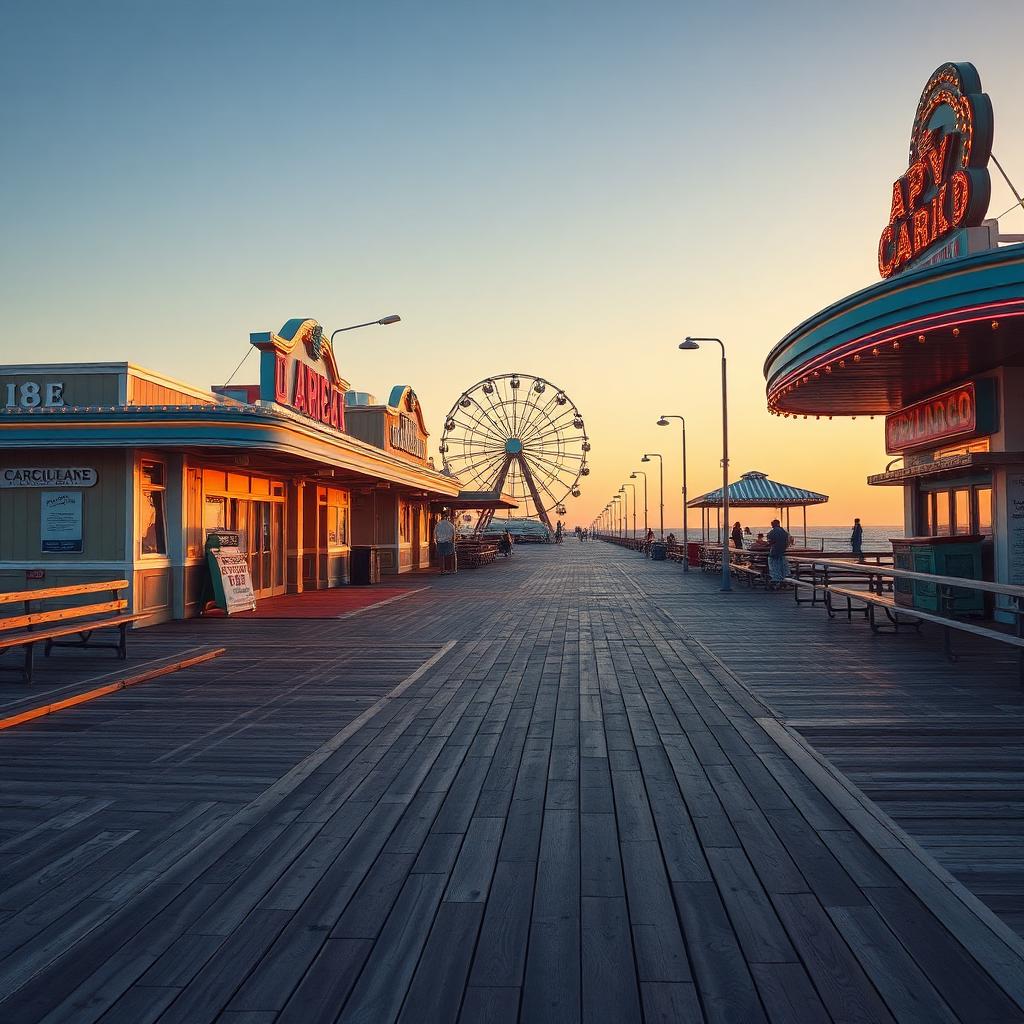
That post-Hazel rebuilding effort laid the foundation for the town we know now. Today, you can stroll along the Carolina Beach Boardwalk—rebuilt, modernized, and expanded over the decades—where historic markers and photographs in local establishments show the stark before-and-after of 1954. Standing at the railing watching the surf roll in, it is a reminder of both the raw power of the Atlantic and the quiet resilience of the island community that rebuilt upon its sands.