When Hurricane Hazel Reshaped Carolina Beach
On October 15, 1954, Hurricane Hazel made landfall near the state line, pushing an unprecedented storm surge that reshaped Carolina Beach and ushered in an era of resilient rebuilding.
By Shelly Winner, Editor
On the morning of October 15, 1954, a high-water mark was set on Pleasure Island that residents still speak about in reverent tones. Hurricane Hazel, a ferocious Category 4 storm packing sustained winds estimated at around 140 miles per hour, roared ashore near the North Carolina–South Carolina state line. Its timing was catastrophic, coinciding precisely with an 8-foot lunar high spring tide. The resulting storm surge smashed into Carolina Beach at an estimated 17 to 18 feet above mean low water, overwhelming the low-lying barrier island.
The ocean literally sliced the town in two. Seawater surged across the dunes and into the Myrtle Grove Sound, inundating the commercial center along Harper Avenue. Beach cottages that had stood for generations were snapped from their foundations, and the original municipal pier was torn away. News accounts from the days that followed reported that out of roughly 2,000 homes in Carolina Beach, an estimated 360 were completely destroyed, while hundreds more suffered major structural damage. Miraculously, orderly evacuations meant loss of life was kept remarkably low, but the physical town was virtually unrecognizable.
Yet within forty-eight hours of the winds subsiding, Carolina Beach began digging out. Heavy equipment rolled in to push mountains of beach sand off streets and away from storefronts. Rather than abandon the coast, local business owners and property owners organized an immediate rebuilding campaign. The post-Hazel building boom altered the town’s architectural fabric, ushering in mid-century cinderblock construction and higher stilt pilings designed to withstand future storm surges.
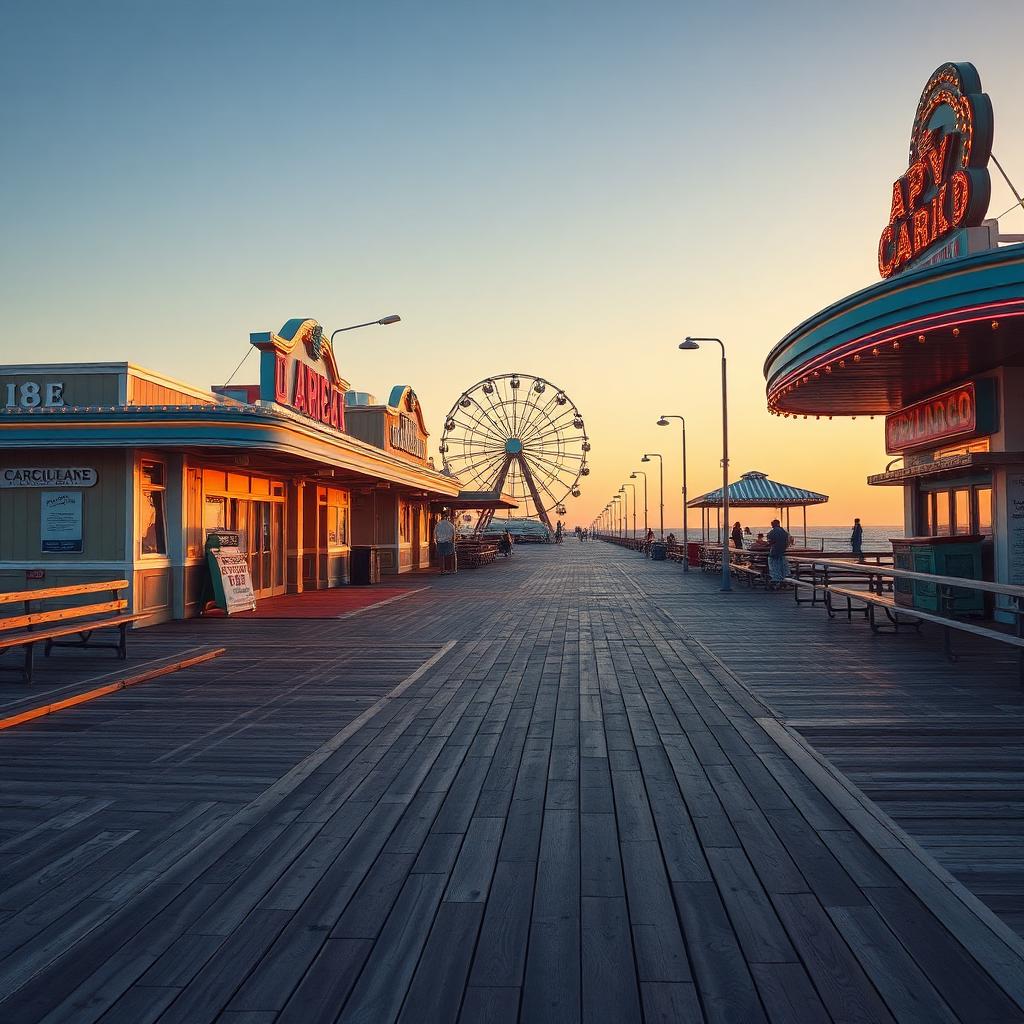
The beloved Carolina Beach Boardwalk area, heavily battered by the waves, was gradually rebuilt with resilience in mind. The new structures were anchored deeper and built to endure, paving the way for the family-friendly amusement district that thrived through the 1960s and beyond. The storm changed how the community lived with the ocean, transforming a rustic, fragile seaside resort into a more modern, storm-hardened coastal town.
Today, you can stroll the revitalized concrete walkway of the Carolina Beach Boardwalk, enjoying an order of hot Britt’s Donuts—a business that famously reopened and persevered after surviving Hazel’s devastating floodwaters. Standing at the water's edge looking out past the dunes, it is humbling to realize that the vibrant rows of beachfront shops and vacation homes you see now rose directly from the sands reshaped by the storm of 1954.